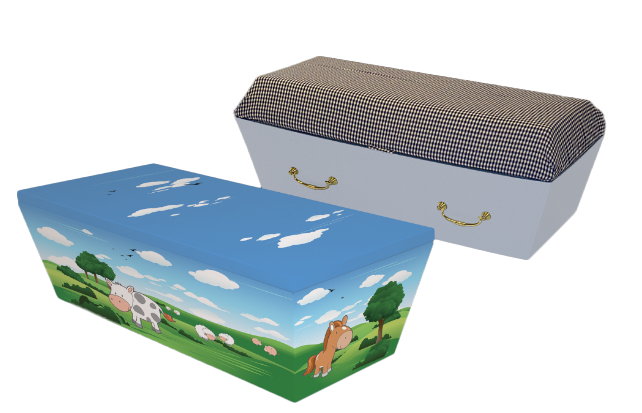
The perhaps unlikely winner of the Sunday Times Best Green Company 2008 was JC Atkinson and Son, a North East based coffin manufacturer that was founded over 70 years ago.
The funeral industry is not one that immediately springs to mind when considering environmentally conscious trade. But the subject of green funerals is one that is dominating the sector and, as the environment tops the public agenda, is becoming an increasingly important issue for many consumers. Coffin manufacturers and funeral directors are ideally placed to ensure that the eco-credentials of the industry are raised and the offer to the consumer allows them to select an environmentally friendly option.
And Julian Atkinson, Managing Director of JC Atkinson and Son, is almost evangelical about the drive to ‘green’ the funeral industry. His passion for the subject is clear and when you look closely at how he runs his successful company, the reason for the national environmental accolade becomes apparent.
The business of dying is one that, when examined, has a huge negative impact on the environment. From the provenance of the materials used in making coffins, to the potential carbon footprint from the cremation of certain products; from the waste generated during the manufacturing process, to the emissions from the polish used to varnish coffins; the funeral industry needs to change.
JC Atkinson and Son is a shining example of how change for the better is being implemented at every level of the business. Improving environmental performance is fundamental to the company, and green initiatives and improvements have been woven into the day to day activity.
As far back as 1998 the company realised it needed to change the way it operated. The cost of sending waste to landfill was escalating and Julian Atkinson decided to use the waste wood to heat the factory. This was the start of a revolution within the company, one that Julian would like to see spreading to the rest of the industry.
“The initiatives we have brought in are in many cases simple and they can have a massive impact on the eco-credentials of any company,” explained Julian. “I realise that this industry can be slow to adopt new things as it has its roots in tradition and heritage, but our company has been running for 70 years and we’ve adapted so I think any company, however traditional, can take steps to become greener.”
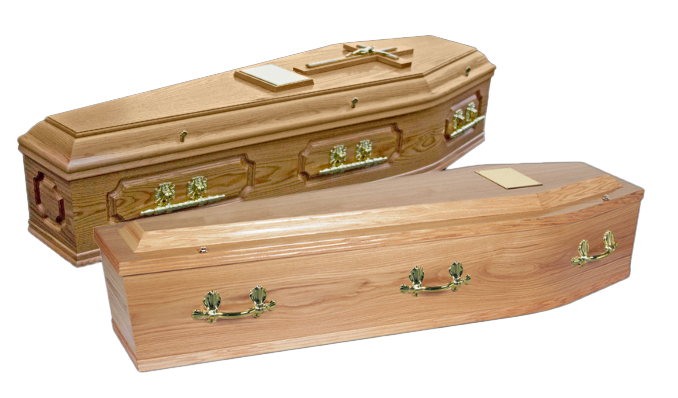
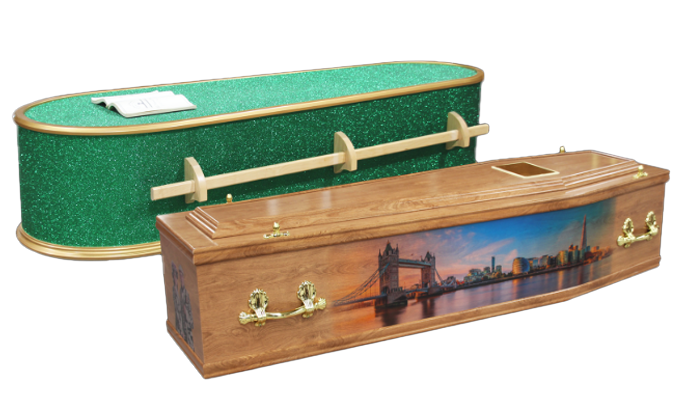
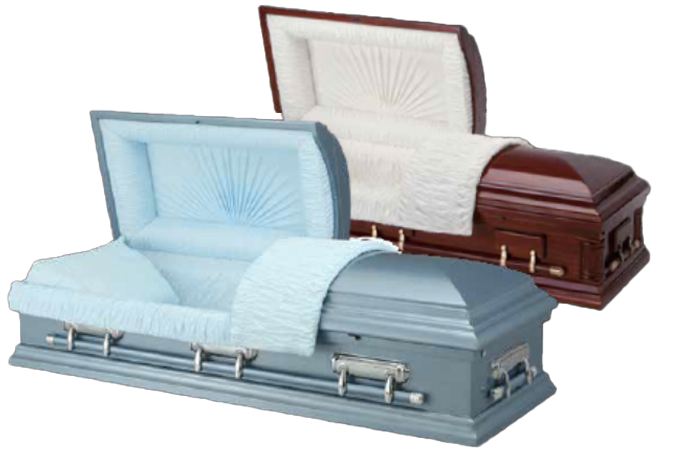
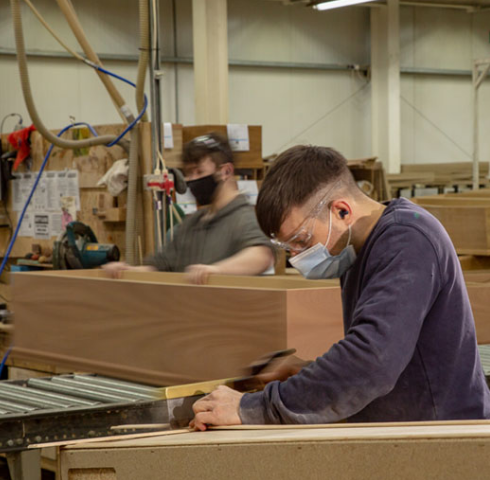
One of the key issues for JC Atkinson and Son is obviously the materials used to manufacture the coffins. And as suppliers of 10% of the UK coffin market, the company’s decisions have a significant impact on the offer to the consumer. With this in mind they researched the options and decided to ensure that all the wood used by the company would be sourced from sustainable forests. In 2000 the firm became accredited by the Forest Stewardship Council (FSC). FSC certified forests are managed to ensure long term timber supplies while protecting the environment and the lives of forest-dependent people. Now 90% of its production is FSC accredited and the most popular material is veneered oak. The oak is felled in Northern Europe and is made into veneer which is locally bonded onto either chipboard or MDF ready for coffin manufacture.
Whilst the company still makes coffins from other woods - these are also from FSC certified materials whenever possible, and chipboard MDF which uses wood waste recycled timber and FSC certified virgin wood fibre made to BS standards - wood is clearly the preferred choice. As Julian explains: “Wood is a natural product and sustainable timber is in abundant supply. It provides positive ecological, economic and aesthetic benefits. Wood is the only renewable natural resource and with proper management it will never run out, unlike all other extracted or mined materials. In fact, in Europe more trees are planted than are felled every year.” The company goes some way towards helping in the re-planting process as for every solid coffin it makes, it donates money to the Woodland Trust to fund sapling tree planting.
Although the company strives to use wood wherever possible, the use of chipboard is not the ‘green crime’ that many believe it to be. Julian comments: “There is a myth that chipboard is not eco-friendly, but in fact this is untrue. Chipboard is simply waste wood chips pressed with glue and heat to make a wood panel. This is then covered with a veneer of wood-effect paper or real wood. Yes, there is a negative impact in the manufacturing process, but this is offset as the chipboard utilises recycled wood which would otherwise be wasted.
“As for the allegation the board is full of dioxins and formaldehyde, this is simply not true. Dioxins are only formed when organic material is burned in the presence of chlorine and this is not part of the chipboard manufacturing process. As for formaldehyde, yes it is a necessary preservative in the glue however to put this in to perspective in one tonne of chipboard the amount of formaldehyde present would weigh the same as two bags of crisps.
“It is also worth mentioning that in simple terms formaldehyde is an organic compound formed as an intermediate in combustion, ie in forest fires, automobile exhaust and tobacco smoke; it is also produced atmospherically with the action of sunlight and metabolicby in most living organisms including humans. In excess it is unpleasant and an irritant but in levels found in a modern responsibly manufactured E1 board the evidence points to no more concern than that in any other modern artifact.”
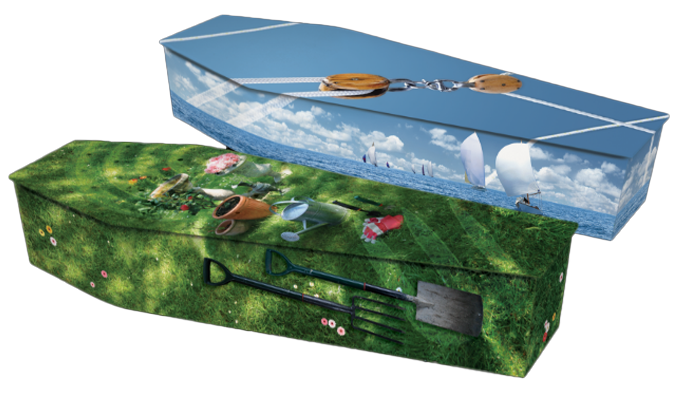
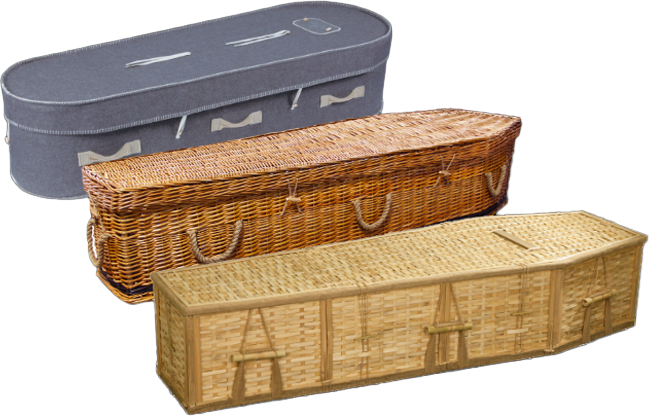
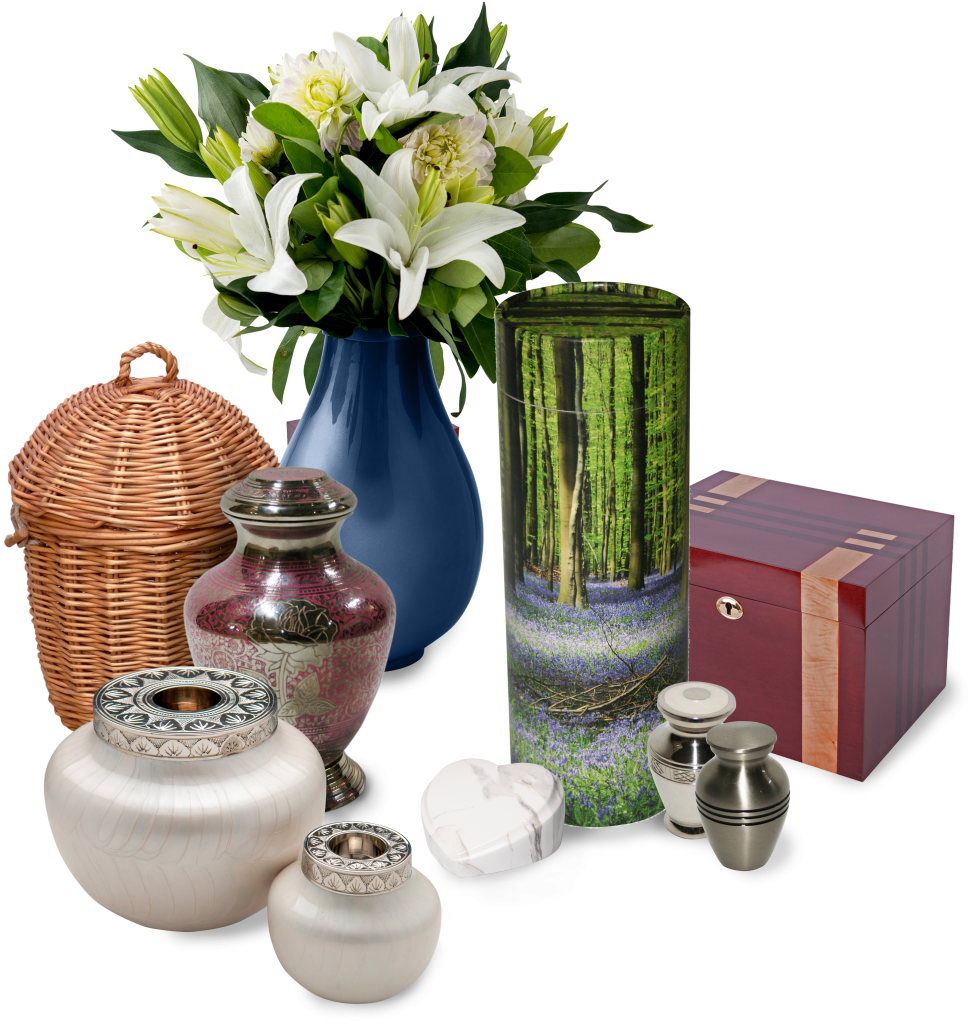
Julian is passionate about the use of wood and products that are as environmentally friendly as possible. Although the industry has seen a rise in consumer demand for more environmentally conscious funerals, he is concerned about misconceptions amongst the public about the green credentials of many materials. For example, cardboard may not be ideal as it is made from wood but has been through additional processes such as bleaching and pulping. Wicker and bamboo certainly look very eco-friendly, but the sustainable source of the materials is not always clear and the transportation costs from the original producer can increase the overall carbon footprint of the burial/cremation process.
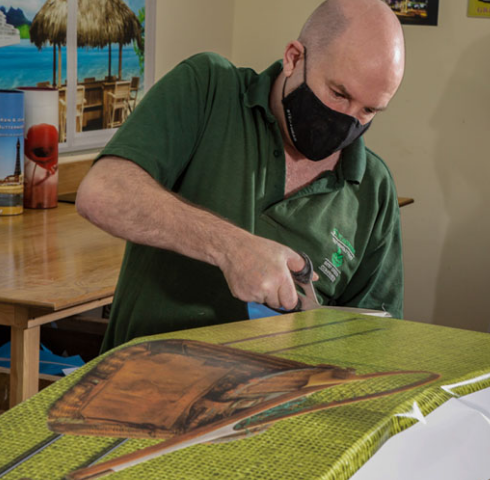
Julian explains: “We rely on funeral directors to represent our products to the public and as a company we wish to communicate more effectively with them as they are increasingly offering alternative more expensive “willow and bamboo” coffins as an eco- friendly alternative without fully appreciating the credentials of our own. In addition options can be offered such as wooden handles and natural fibre cotton, jute shrouds, thus allowing our coffin to compete with these alternatives from the perspective of biodegradability.”
It is not just the sustainability of wood that is an issue for coffin manufacturers. There is also the impact of coffins and caskets when either buried or cremated. The process of burning wood is carbon neutral as the level of CO2 given off is exactly the same as the wood absorbed from the atmosphere when growing as a tree. During a cremation, the wood coffin will actually aid the cremation, reducing the need for fuel, this probably is Gas or non renewable sourced Electric. It therefore does not contribute towards global warming. And as wood has no sulphur content, it doesn’t cause acid rain. Wood also gives off the same level of CO2 when decaying, so whether burial or cremation is chosen, wood is the greenest material available.
The company saw further opportunities to become more environmentally efficient when it relocated premises in 2005. Julian Atkinson project managed the build of the factory in Washington, Tyne and Wear. Constructed on a brown-field site, the building has a number of features built into it to make it incredibly environmentally efficient. The roof has extra skylights to minimise the need for electric lighting inside. Rainwater is collected from the roof and stored in an underground tank. It is then used for cleaning vans and flushing toilets, a simple system that saves around 50,000 litres of water a year. On the shop floor drying lines have been introduced to speed up the drying time of water-based varnish after it has been applied to the coffins. Special pumps have also been installed that cut down on waste from lacquer sprays. They have altered the types of polish used ahead of legislation and introduced a system which uses an ultra-violet cured water-based polish. This has no Volatile Organic Compounds (VOCs) within it, which are five times more harmful to the climate than CO2, and eradicates emissions from the polishing process.
But perhaps the most significant piece of kit that Julian Atkinson has put in place is a huge biomass generator. He believes they are one of only a handful of companies in this sector to have installed such a system and to have capitalised on this type of energy source. All the wood off-cuts and sawdust from the manufacturing process is collected and fed into the generator. This then supplies heat and electricity for the factory and even generates surplus electricity for the national grid. According to the Renewable Energy Association this form of combined heat and power supply can increase the overall efficiency of fuel use to more than 75% and it plays an increasingly important role in reducing carbon dioxide emissions, achieving reductions of as much as 50%. It also lowers emissions of sulphur dioxide and nitrogen oxides, reducing acid rain.
The company has looked at every aspect of its business, from the construction of the factory to the manufacturing process and operational procedures. Wherever possible they have tried to introduce initiatives that make the production of 60,000 coffins a year an environmentally sound process. From the materials used to the company cars (which all use liquid petroleum gas and produce lower CO2 emissions); from their commitment to using local suppliers to the introduction of an innovative heating and power system, JC Atkinson and Son is an example to many within the industry and indeed within other manufacturing sectors.
Julian Atkinson’s commitment to running his business in an environmentally responsible way is admirable. But his fervent hope is that by entering awards such as the Sunday Times Green Awards, he will raise awareness within the industry and amongst the general public of the fact that anyone who wants a natural, green funeral should look towards wood as a natural, carbon neutral material.